Services
Your Parish
Information about heddington parish council


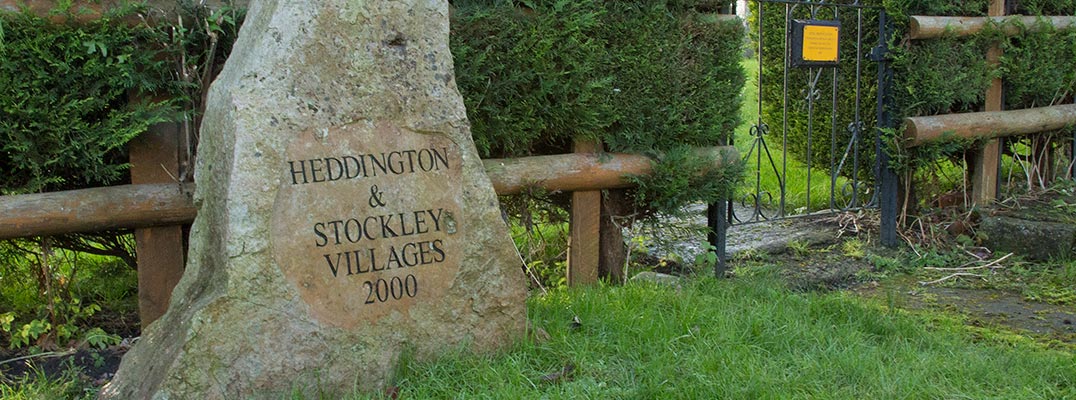


Heddington Parish is split into two wards, Heddington and Stockley. It adjoins the parishes of Calne, Bromham, Derry Hill & Studley, Devizes, Bishops Canning and Cherhill and sits to the south of Calne. The Parish encompasses the villages of Heddington and Stockley, and hamlets of Heddington Wick and the Splatts, Broads Green and Mile Elm. The parish lies at the Western scarp of the Marlborough Downs. The highest point of the parish is the summit of King’s Play hill which stands at 230 m. The name King’s Play refers to the Battle (and Royalist victory) on Roundway Down in 1643. There are several barrows on King’s Play Hill including a Neolithic long barrow and a bowl barrow containing a Saxon burial. Roman remains have been found at Heddington Wick and elsewhere in the west part of the parish. King’s Play is also a site of Special Scientific Interest.
Heddington (and its neighbouring hamlet of Stockley) has an active and sociable community with various groups and events. The Parish Council bought the old red phone box in the centre of the village and it is now a successful and well-used book swap. The Village Recreation Ground is a focal point to the parish with a range of popular play equipment for children. The Parish Council also maintains seven remembrance trees planted between the Recreation Ground and the neighbouring field.
There are annual events like the Car Rally which takes place in July, the Harvest Auction held at The Ivy in September and Carol Singing around the village a week or so before Christmas.
A high point for the village was during 1975/76 when the BBC visited and filmed all the goings on during a full year—the programme was called Diary of a Village. There are a few copies floating around the parish. If you are interested in the history of the village, there is a booklet written by Richard Cole (local historian) full of interesting information and facts. Copies may be available if you contact the Clerk.
Various organisations, group and clubs help make our Parish an active and sociable community. For further information see the Community Groups and Activities page.
Your Parish Council currently has nine locally elected members (seven for Heddington Ward and two for Stockley Ward) and the services of a part-time paid Clerk.
The Council meets every other month including the Annual Meeting which is held in May each year, all dates can be found in the Calendar. Every meeting is open to the public, whom we would encourage to attend. Notices of meetings are placed on the village notice boards at least three clear days prior to the meeting. A summons to attend the meeting is also issued, specifying the agenda, to every member of the Council. Items not on the agenda cannot be formally debated or resolved. Items brought up by the attendance of the general public or in correspondence can be discussed, but formal resolutions on these must be deferred to the next meeting so that due notice can be given.
Heddington Parish Council pays for the services of a Clerk (for two hours a week). The Clerk is responsible for the administration of the Council and is the “Proper Officer” (secretary). The Clerk actions the decisions of the Council, receives official correspondence and issues correspondence on the instructions of the Council. The Clerk additionally prepares the agenda, gives notice of those and records and publishes the minutes. The Clerk also manages and updates the Parish Council Facebook page (Heddington Parish Council). The Clerk is the formal point of contact for the public. Heddington Parish Council also has a “Responsible Financial Officer” who is responsible for the monitoring of the Council’s finances.
Council elections take place every four years.
A Bit of Background to Parish Councils
Parish Councils are the smallest unit of government and also the one closest to their electorate. The vast majority of the Parish Council’s powers are discretionary; the only powers which are obligatory are the provision of allotments where there is sufficient demand and space to provide them. The Parish Councils’ discretionary powers are wide ranging. For example, a Council can run a village hall, playing fields, or Council offices, can own property, manage burial grounds, make bylaws, maintain public clocks, footpaths, lighting, open spaces, public conveniences and war memorials, provide wayside seats, bus shelters, boundary signs, additional litter bins, and arrange cleaning, litter picking and pavement sweeping.
The cost of the services and maintenance arranged by the Council for the benefit of its residents comes from the Precept; this is the money the Parish Council requests from residents of the village via the Council Tax bill, collected in this instance by the Wiltshire Council. Councils are also often consulted by higher authorities, for example, they receive notice of roadworks and are asked to comment on planning applications (their comments have no special force over and above anyone else’s, they just ensure that at least some local opinion is heard). Councils additionally get invited to attend a wider variety of meetings and panels.